
If you’ve accidentally broken your WordPress site by editing theme files in the Theme Editor, don’t panic. This guide walks you through multiple reliable methods to undo theme editor changes, including using backups, restoring via FTP, and leveraging version control. You’ll get your site back online quickly—even if you’re not a developer.
Key Takeaways
- Always back up before editing: Never modify theme files without a recent backup—this is your safest undo option.
- Use a child theme: Editing parent themes directly risks losing changes during updates; a child theme protects your customizations.
- Access files via FTP or File Manager: If the WordPress dashboard crashes, use FTP or your hosting control panel to restore original files.
- Check for auto-saved revisions: WordPress sometimes keeps temporary copies of edited files—look for them in the Theme Editor.
- Reinstall the theme as a last resort: If all else fails, reinstalling the theme (while preserving content) can fix corrupted files.
- Prevent future issues with plugins: Tools like WP Reset or version control plugins help manage and revert changes safely.
How to Undo Theme Editor Change WordPress: A Complete Recovery Guide
So, you opened the WordPress Theme Editor, made a few tweaks to your theme’s functions.php or style.css file… and now your site is showing a white screen, error messages, or just looks completely broken. Don’t worry—this happens to everyone, even experienced developers. The good news? You can almost always undo theme editor changes in WordPress if you act quickly and follow the right steps.
In this guide, you’ll learn five proven methods to restore your site after a bad theme edit—from using built-in WordPress features to accessing your server directly. Whether you’re a beginner or a seasoned user, these steps will help you recover without losing your content, plugins, or settings.
Method 1: Use the WordPress Theme Editor’s Built-In Undo (If Available)
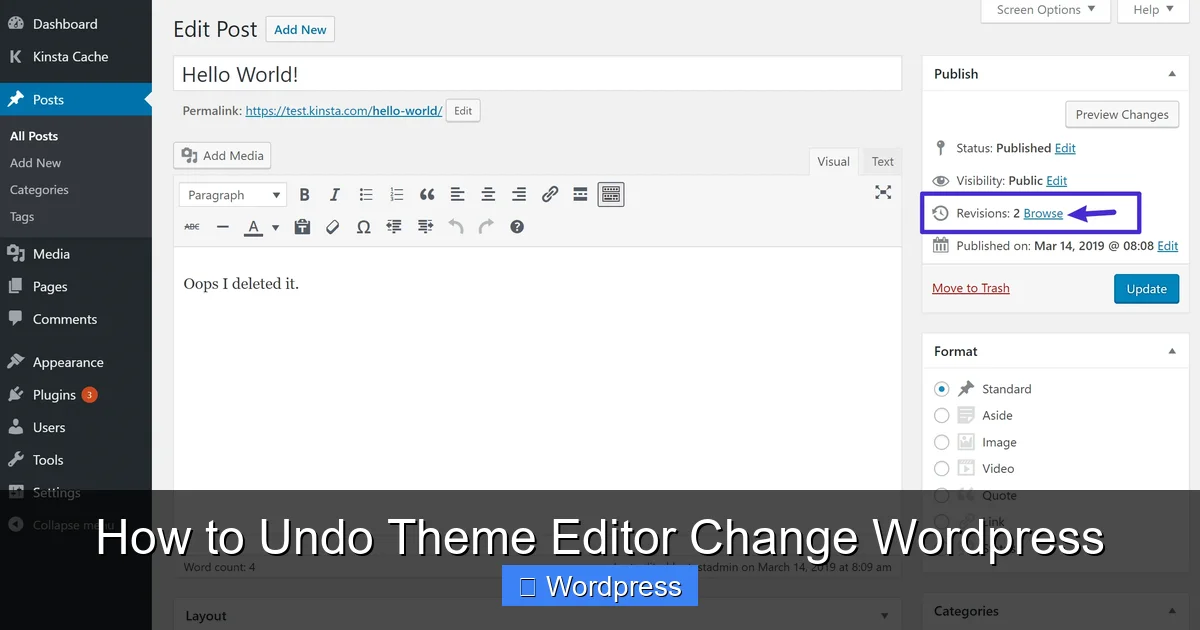
Visual guide about How to Undo Theme Editor Change WordPress
Image source: kinsta.com
Sometimes, WordPress saves a temporary copy of your file before you update it—especially if you’re editing via the dashboard. Here’s how to check:
Step 1: Reopen the Theme Editor
Go to Appearance > Theme File Editor in your WordPress admin panel. If your site is still accessible, this might work.
Step 2: Look for “Restore” or “Previous Version”
At the top of the editor, you may see a message like “This file has been modified.” Some themes or WordPress versions show a Restore button or a dropdown with previous versions. If available, click it to revert to the last saved state.
Step 3: Check for Auto-Saved Revisions
WordPress doesn’t officially support file versioning in the Theme Editor like it does for posts—but some hosting providers or security plugins (like WP Activity Log) may keep logs or backups of file changes. Check your plugin list or contact your host.
Tip: This method only works if your site is still loading the admin area. If you see a “White Screen of Death” or fatal error, skip to Method 2.
Method 2: Restore the File Using FTP or File Manager
When the WordPress dashboard is inaccessible, your best bet is to access your site’s files directly through FTP or your hosting control panel.
Step 1: Connect to Your Site via FTP
Use an FTP client like FileZilla or Cyberduck. Enter your FTP credentials (usually found in your hosting account under “FTP Accounts” or “File Manager”).
Step 2: Navigate to the Theme Folder
Go to:
/wp-content/themes/your-theme-name/
Replace “your-theme-name” with the folder name of the active theme (e.g., “twentytwentyfour”).
Step 3: Locate and Replace the Edited File
Find the file you modified (e.g., functions.php or style.css). If you have a backup copy (from before the edit), upload it to replace the broken one.
If you don’t have a backup, download a fresh copy of the theme:
- Go to the official WordPress theme directory or the developer’s site.
- Download the original theme ZIP file.
- Extract it on your computer and locate the clean version of the file you edited.
- Upload the original file to your server, overwriting the broken one.
Step 4: Clear Cache and Test
After replacing the file, clear any caching plugins (like WP Super Cache or W3 Total Cache) and your browser cache. Then reload your site.
Pro Tip: Always keep a local copy of your theme files before editing. This saves hours of panic later.
Method 3: Use a Full Site Backup to Restore
If you regularly back up your WordPress site, this is the safest and fastest way to undo theme editor changes.
Step 1: Identify Your Backup Source
Check if you use a backup plugin like UpdraftPlus, Jetpack, or BackupBuddy. Alternatively, your hosting provider (e.g., SiteGround, Bluehost, or Kinsta) may offer automatic daily backups.
Step 2: Restore from the Last Good Backup
Most plugins let you restore individual files or the entire site. If only the theme was affected, restore just the /wp-content/themes/ folder to avoid overwriting newer content.
For host-managed backups:
- Log into your hosting control panel (e.g., cPanel, Plesk, or custom dashboard).
- Find the “Backups” or “Restore” section.
- Select a backup from before the error occurred.
- Restore the files (not the database, unless necessary).
Note: Restoring the entire site will revert all changes since the backup date—use this only if other methods fail.
Method 4: Reinstall the Theme (Preserving Content)
If you can’t recover the file and don’t have a backup, reinstalling the theme is a reliable fallback. This won’t delete your posts, pages, or media—only the theme files.
Step 1: Download a Fresh Copy of the Theme
Go to Appearance > Themes. If your site is still accessible, hover over the active theme and click “Delete.” Then click “Add New” and search for the same theme to reinstall it.
If the dashboard is down, use FTP to delete the theme folder (e.g., /wp-content/themes/twentytwentyfour/), then upload a fresh copy.
Step 2: Reactivate the Theme
After reinstalling, go to Appearance > Themes and activate it again. Your content, widgets, and settings should remain intact.
Important: If you made customizations directly to the parent theme (not a child theme), those changes will be lost. That’s why using a child theme is strongly recommended for any modifications.
Method 5: Use a Plugin to Reset or Revert Changes
Plugins can automate recovery and prevent future mishaps.
Option A: WP Reset Plugin
The WP Reset plugin lets you reset specific parts of your site—including theme settings—without affecting content. It also creates snapshots before major changes.
Option B: Version Control Plugins
Plugins like VersionPress or WP Rollback integrate with Git or offer rollback features for plugins and themes. These are ideal for developers or advanced users.
Option C: File Change Detection
Security plugins like Wordfence or Sucuri monitor file changes and can alert you—or even revert unauthorized edits.
Troubleshooting Common Issues
“White Screen of Death” After Editing functions.php
This usually means a PHP syntax error. The fastest fix is to rename the functions.php file via FTP (e.g., to functions-old.php). WordPress will revert to the default theme file. Then restore the correct version.
Site Loads but Looks Broken
Likely a CSS or JavaScript error. Check the browser console (F12 > Console) for errors. Revert the style.css or script.js file using FTP.
Theme Editor is Disabled
Some hosts disable the Theme Editor for security. You’ll need to use FTP or File Manager instead. You can re-enable it by adding define('DISALLOW_FILE_EDIT', false); to your wp-config.php file—but only if absolutely necessary.
How to Prevent Theme Editor Disasters in the Future
Never edit theme files directly in production. Instead:
- Use a child theme for all customizations. Learn how to create a WordPress theme with Elementor or manually.
- Test changes on a staging site before applying them live.
- Install a backup plugin and schedule daily backups.
- Avoid the Theme Editor—use a local development environment or code editor with version control.
- Document every change you make, including file names and dates.
Conclusion
Breaking your site with a theme editor mistake is stressful—but rarely permanent. Whether you use FTP, a backup, or a plugin, you now have multiple ways to undo theme editor changes in WordPress. The key is acting fast and knowing your recovery options.
Remember: the best fix is prevention. Always back up, use child themes, and test safely. And if you ever need to delete a theme in WordPress or update a theme safely, we’ve got guides for that too.
With these tools and habits, you can edit with confidence—and recover with ease.