This guide walks you through how to edit navigation menu in WordPress using the built-in Customizer or Block Editor. You’ll learn to add, remove, and organize menu items, plus fix common problems—no coding needed.
Key Takeaways
- Access menus via Appearance > Menus or the Customizer: Both tools let you manage navigation easily, depending on your theme and preference.
- Create custom menus for different locations: Assign unique menus to header, footer, or sidebar areas based on your site’s design.
- Add pages, posts, categories, and custom links: Expand your menu with internal content or external URLs for better navigation.
- Drag and drop to reorder items: Organize menu structure intuitively by dragging items into your preferred hierarchy.
- Use sub-menus (dropdowns) for better organization: Nest items under parent pages to keep your menu clean and user-friendly.
- Clear cache if changes don’t appear: Some plugins or themes may delay updates—clearing cache often resolves this.
- Check theme compatibility if menus are missing: Not all themes support multiple menu locations—verify your theme’s capabilities first.
Introduction: Why Editing Your WordPress Navigation Menu Matters
Your website’s navigation menu is like a roadmap for visitors. It guides them to important pages—like your blog, contact form, or shop—and直接影响s how long they stay on your site. If your menu is cluttered, outdated, or hard to use, visitors might leave quickly. That’s why knowing how to edit navigation menu in WordPress is essential for any site owner.
In this guide, you’ll learn everything from accessing the menu editor to customizing links, creating dropdowns, and fixing common issues. Whether you’re using a classic theme or a modern block-based one, we’ve got you covered. No coding required—just clear, simple steps.
Step 1: Access the WordPress Menu Editor
WordPress offers two main ways to edit menus: the Customizer and the Menus screen. Both are user-friendly, but the best choice depends on your theme and workflow.
Visual guide about How to Edit Navigation Menu in WordPress
Image source: themesharbor.com
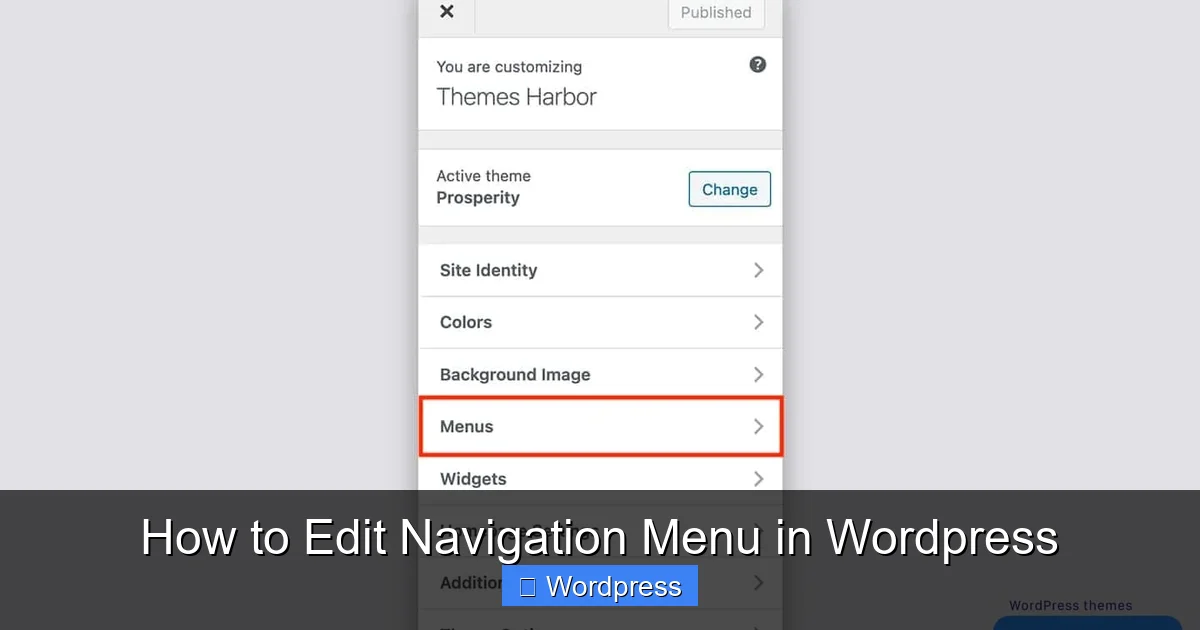
Option A: Using the Customizer (Recommended for Beginners)
The Customizer gives you a live preview of your changes, so you can see exactly how your menu looks as you edit it.
- Go to Appearance > Customize in your WordPress dashboard.
- Click on Menus in the left sidebar.
- If you already have a menu assigned to a location (like “Primary”), it will appear here. Click on it to edit.
- If no menu exists, click Add a Menu, give it a name (e.g., “Main Menu”), and click Create Menu.
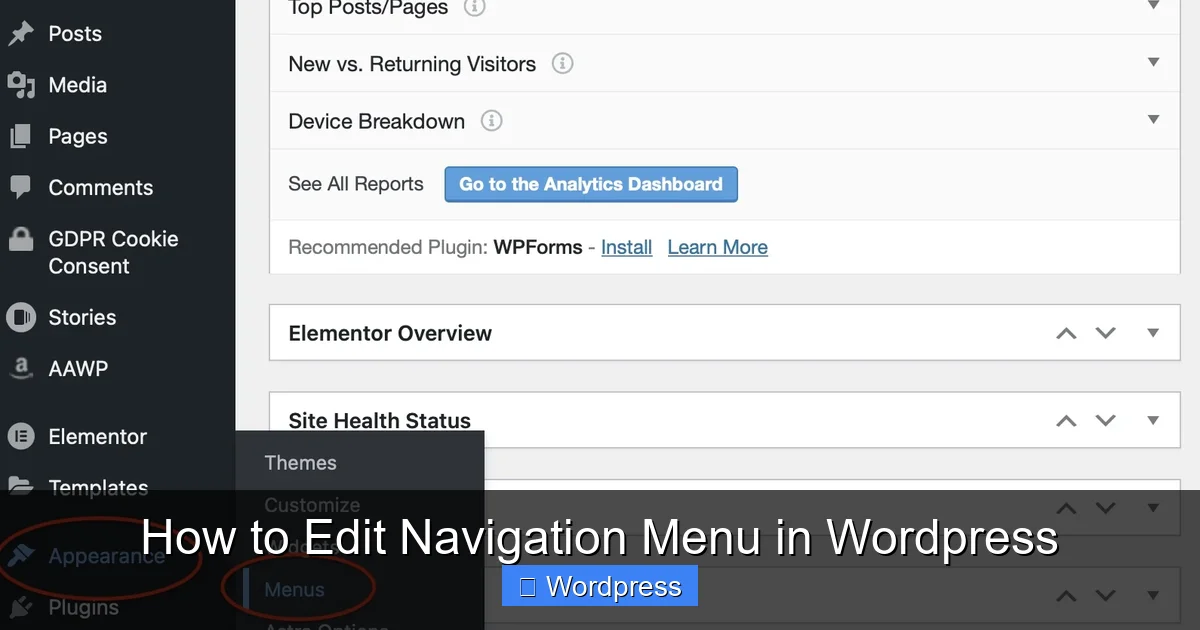
Option B: Using the Menus Screen (More Control)
This method is ideal if you prefer a dedicated editing interface or need advanced options.
- Navigate to Appearance > Menus.
- At the top, you’ll see a dropdown labeled “Select a menu to edit.” Choose an existing menu or click Create a New Menu.
- Enter a name (e.g., “Header Menu”) and click Create Menu.
Tip: Some themes, like those built with Elementor, may use their own menu systems. In such cases, check your theme documentation or use our guide on how to create WordPress theme with Elementor for more details.
Step 2: Add Items to Your Navigation Menu
Once your menu is created, it’s time to populate it with useful links. WordPress lets you add various content types.
Visual guide about How to Edit Navigation Menu in WordPress
Image source: nichepursuits.com
Add Pages
- In the left column under Pages, check the boxes next to the pages you want to include (e.g., Home, About, Services).
- Click Add to Menu.
Add Posts or Blog Links
- Click on Posts in the left panel.
- Select individual posts or choose “View All” to browse more.
- Check the desired items and click Add to Menu.
Add Categories or Custom Taxonomies
- Expand the Categories section.
- Check categories like “News” or “Tutorials” to let users browse by topic.
- Click Add to Menu.
Add Custom Links (External URLs or Anchors)
- Click on Custom Links.
- Enter the full URL (e.g., https://example.com) and a link text (e.g., “Visit Our Partner”).
- Click Add to Menu.
Pro Tip: Use custom links for social media profiles, external resources, or anchor links (like #contact) within long pages.
Step 3: Organize and Structure Your Menu
A well-organized menu improves user experience and SEO. Here’s how to structure it effectively.
Reorder Menu Items
- In the menu editor, simply drag and drop items to rearrange them.
- Place the most important pages (like Home or Contact) at the beginning.
Create Dropdown Menus (Sub-Menus)
- Drag a menu item slightly to the right under another item.
- A small arrow will appear—this creates a dropdown.
- For example, place “Team” under “About Us” to create a nested link.
Set Menu Locations
- At the bottom of the menu editor, you’ll see Menu Settings.
- Check the boxes for where you want this menu to appear (e.g., “Primary Menu,” “Footer Menu”).
- Click Save Menu when done.
Note: Available menu locations depend on your theme. If you don’t see expected options, your theme may not support them. Learn more about whether navigation menus are automatically generated in WordPress themes.
Step 4: Customize Menu Appearance (Optional)
Most themes allow basic styling, but for advanced changes, you may need CSS.
Change Menu Labels
- Click the downward arrow next to any menu item to expand its settings.
- Edit the Navigation Label (e.g., change “Blog” to “Latest News”).
Add CSS Classes (For Developers)
- In the same expanded menu item, look for CSS Classes.
- Add a custom class like “highlight” to style it differently.
- Then, use custom CSS to target it. For help adding CSS, see our guide on the best way to add CSS in WordPress website.
Hide Menu Items from Certain Users (Advanced)
- Use plugins like “User Role Editor” or “Nav Menu Roles” to show/hide items based on login status.
- This is useful for member-only sections.
Step 5: Troubleshooting Common Menu Issues
Even with careful editing, problems can arise. Here’s how to fix the most common ones.
Menu Not Appearing on the Frontend
- Double-check that you’ve assigned the menu to a location under Menu Settings.
- Clear your browser cache and any caching plugins (like WP Super Cache).
- If using a page builder, ensure it’s not overriding the theme menu.
Changes Not Saving
- Make sure you clicked Save Menu after editing.
- Try refreshing the page and re-saving.
- Disable plugins temporarily—some may interfere with the menu editor.
Missing Menu Locations
- Your theme may not support multiple menus. Check your theme documentation.
- Consider switching to a more flexible theme. For help choosing, read our guide on how to apply WordPress theme.
Broken or Incorrect Links
- Edit the menu item and verify the URL.
- For internal links, use relative paths (e.g., /contact) instead of full URLs when possible.
- Use our guide on fixing broken links in WordPress without plugin for bulk fixes.
Conclusion: Keep Your Navigation Clean and Functional
Editing your WordPress navigation menu doesn’t have to be complicated. With the built-in tools, you can create a clear, intuitive menu that helps visitors find what they need—fast. Remember to keep it simple: too many items can overwhelm users. Focus on key pages, use dropdowns wisely, and test your menu on mobile devices.
Regularly review and update your menu as your site grows. Add new services, remove outdated pages, and refine labels for clarity. A well-maintained menu boosts engagement, reduces bounce rates, and supports your overall SEO strategy.
Now that you know how to edit navigation menu in WordPress, take a few minutes to audit your current setup. Small improvements can make a big difference in user experience.